
Wirral Council projects a £52.3m gap in its 2027/28 budget and wants a 6% rise in fees and charges from January. Councillors discuss it on 18 November.
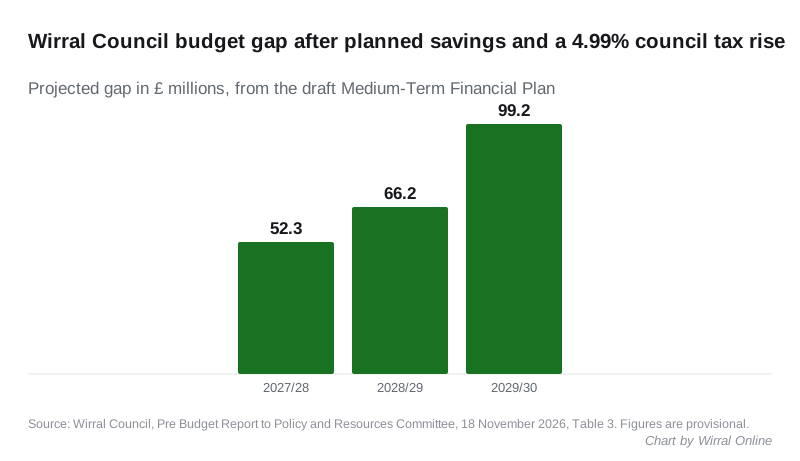
Wirral Council expects to be £52.3m short of balancing its budget for 2027/28, even after £23.3m of planned savings and a 4.99% council tax rise. The figure is in the council’s pre-budget report, which goes to the Policy and Resources Committee on Wednesday 18 November.
The report asks councillors to agree a 6% rise in the council’s fees and charges from January 2027. It also confirms that officers have met the Ministry of Housing, Communities and Local Government to discuss “the scale of the budget gap” and how the Government might help.
The pre-budget report was published with the committee’s agenda. The figures are provisional: the report says they are still being challenged and are not the confirmed 2027/28 position.
How the gap is made up
The council’s Table 3 starts from a £5.9m gap already in its plans for 2027/28. It then adds:
- £66.2m of new cost pressures, up from £35.5m in the previous plan
- £14.1m from a fall in funding before any council tax rise
That makes a gap of £86.1m before anything is done about it. Planned savings of £23.3m and the council tax rise, worth £10.6m, bring it down to £52.3m.
The pressures break down as £23.0m from inflation, £16.9m from demographics, £12.1m from service pressures and £14.0m from corporate items such as pay, pensions and borrowing costs. The report assumes a 3.5% pay rise for staff.
A sensitivity analysis in the report puts the possible range for the 2027/28 gap at between £37.2m and £65.0m. Without further action the gap grows to £66.2m in 2028/29 and £99.2m in 2029/30.
Why the costs are rising
The report puts most of the pressure on adult social care and on special educational needs and disabilities. It gives these figures:
- new requests for adult social care support rose 19%, from 15,785 in 2022/23 to 18,785 in 2024/25
- spending on home-to-school transport rose from £5.7m in 2020/21 to £14.2m in 2025/26
- economic inactivity in Wirral is 23.2%, against 21.1% across the North West
Between 2022/23 and 2025/26 the council delivered £74.9m of savings and mitigations against a target of £84.4m. The report says this “has not been sufficient” to keep up with demand.
This year is overspending too
A separate report to the same meeting forecasts an £8.1m overspend for 2026/27, on a net budget of £495.2m. That is £4.3m worse than the forecast three months earlier. Adult social care accounts for £5.9m of it, with home-to-school transport and children’s residential placements also rising.
The council’s 2026/27 budget already relied on £6m of Exceptional Financial Support, which is Government permission to borrow to cover day-to-day spending. The pre-budget report says borrowing taken under that support has raised the council’s debt costs, and that leaning on it again to close the whole gap “would not provide a prudent or sustainable solution”.
What the council plans to do
The draft Sustainable Council Savings and Transformation Plan identifies £49.2m of savings over three years: £23.3m in 2027/28, £17.0m in 2028/29 and £8.9m in 2029/30. Its programmes include:
- cutting the council’s headcount by 10% over five years, with £2.1m of savings pencilled in for 2027/28
- a “smaller, higher-quality” leisure offer, with market testing to decide whether an outside operator takes it on
- weekly food waste collections and green bins emptied every three weeks
- reassessing assisted travel, including school transport for children with special educational needs, against a refreshed policy
- faster collection of council tax, business rates and adult care debts
The report says plainly that savings alone will not close the gap. It describes “further time-limited support from Government” as part of the plan.
The schools deficit sits outside these figures
The deficit on the Dedicated Schools Grant, driven by high needs spending, is kept off the council’s main books by a statutory override until 31 March 2028. The council has been awarded a £59.8m High Needs Stability Grant. Even so, the deficit is forecast to reach £117.7m by 31 March 2027 and £182.8m a year later, leaving £123.1m uncovered when the override ends.
What it means for you
- Fees and charges: if the committee agrees, most council fees and charges rise by 6% from January 2027. The exceptions are charges limited by law and those where a rise would make the council uncompetitive. The report estimates this raises just over £1m a year. It does not list which charges change.
- Council tax: the plan assumes a 4.99% rise in April 2027, made up of 2.99% for general spending and 2% for adult social care, in line with the Government’s referendum limits. Each 1% raises about £2.1m on top of Wirral’s current council tax bands.
- Council tax support: the reduction scheme introduced on 1 April 2026 costs about £7m a year, and the report proposes no changes to it.
- Services: the council says it must “shrink overall” and reorganise how some services are provided. Individual proposals will need their own decisions and, where required, consultation.
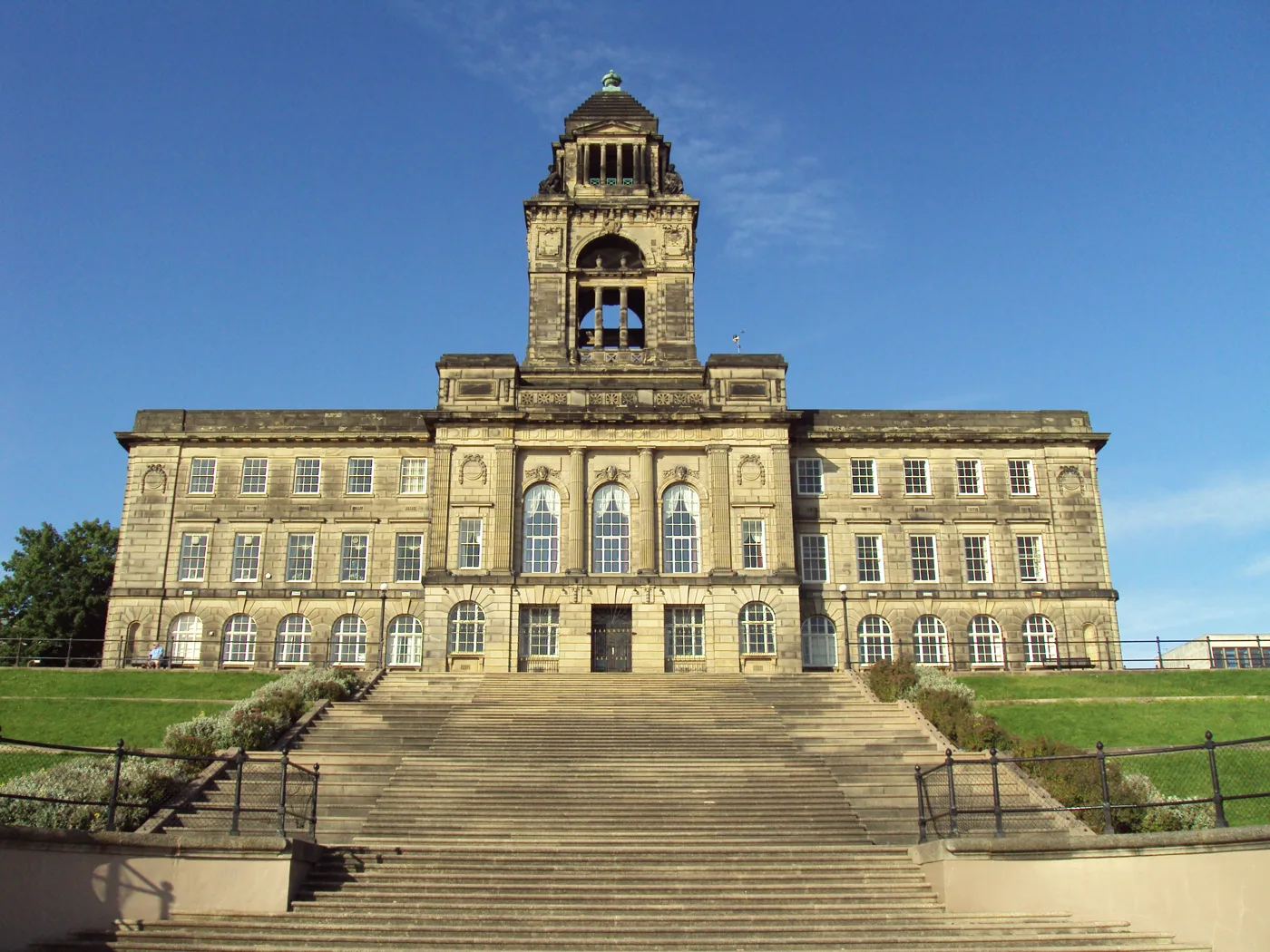
The report warns that if a balanced budget cannot be set, the council’s chief finance officer may have to issue a section 114 notice. That bans new spending except on statutory services, though existing contracts can continue. The council’s timetable has the Government’s provisional funding settlement in mid-December, final budget proposals at the Policy and Resources Committee on 10 February 2027 and the budget vote at Full Council on 1 March 2027. The Policy and Resources Committee meets at Wallasey Town Hall at 6pm on 18 November, and the meeting is webcast.
Have your say