
Preparing the Borough Yard site in Birkenhead for up to 1,600 homes will cost £66.03m, £8.9m over budget. Councillors are asked to sign a £36.5m contract on 18 November.
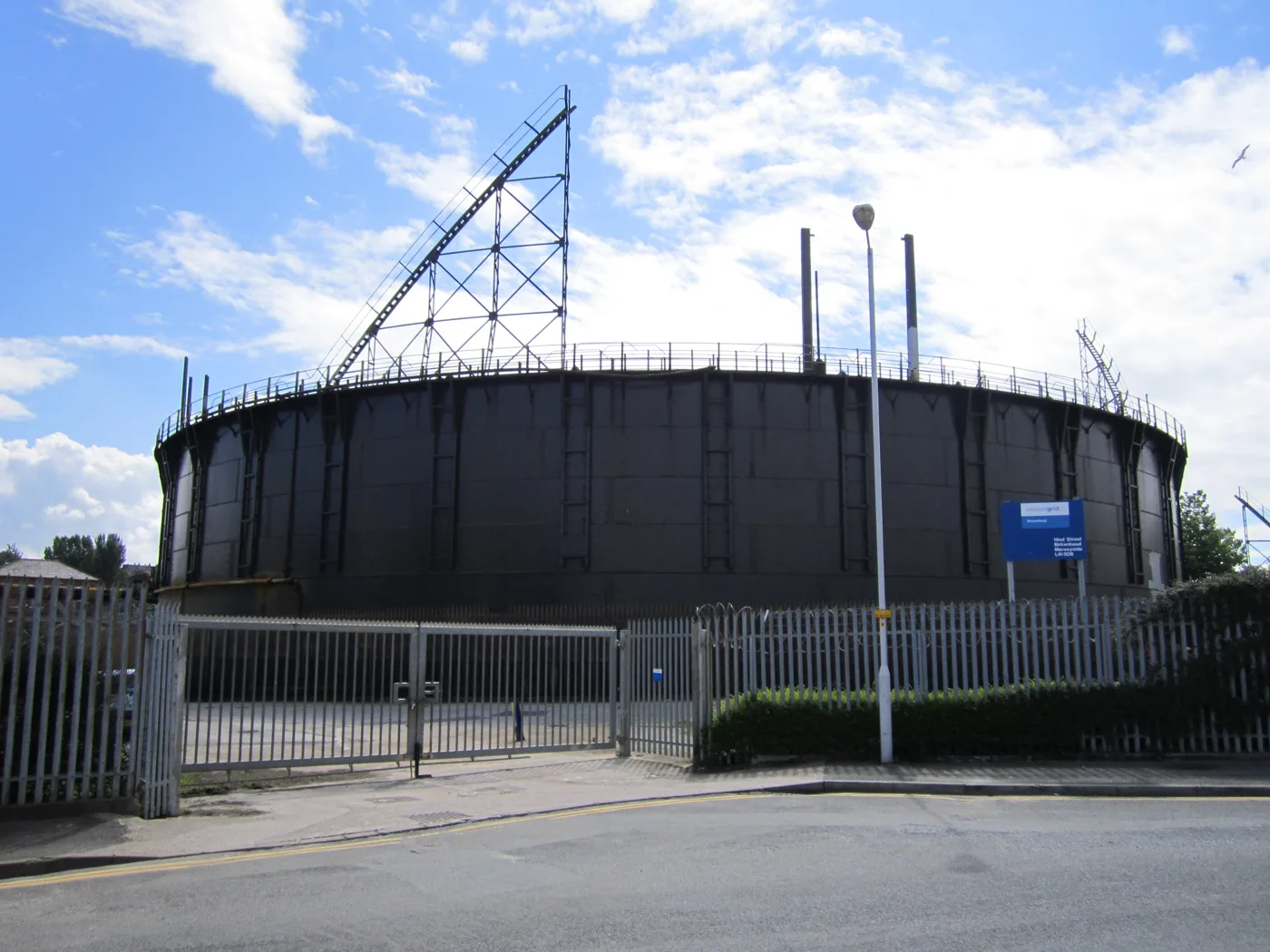
The cost of preparing the former gasworks at Hind Street in Birkenhead for new housing has risen to £66.03m, £8.9m more than the approved budget. The site, now called Borough Yard, is planned to take up to 1,600 homes over the next 10 to 15 years.
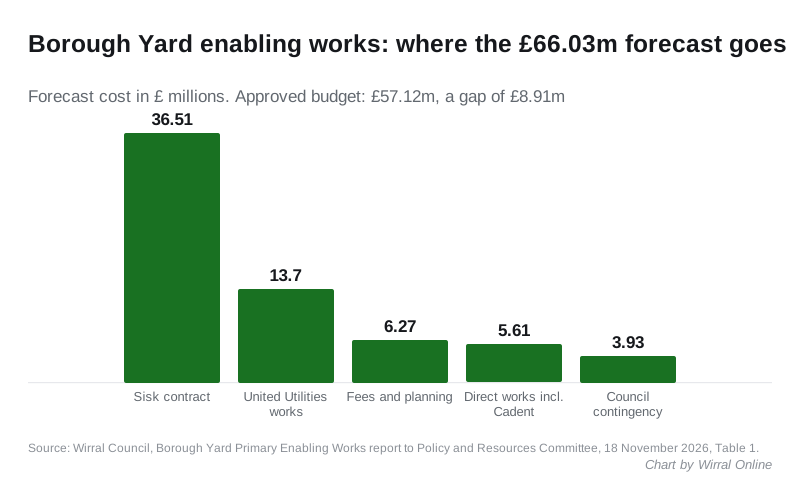
Wirral Council’s Policy and Resources Committee is asked on Wednesday 18 November to appoint John Sisk & Son to do the main groundwork, under a fixed-price contract worth £36.511m. The committee report sets out the figures. The council’s own announcement on 11 November did not mention the overspend.
What the money pays for
Borough Yard sits between Birkenhead Central and Green Lane stations. Hybrid planning permission was granted on 8 October 2025. It gives full consent for the enabling works and removing the flyovers, and outline consent for the homes, shops and public space.
The Sisk contract now covers:
- cleaning up and re-engineering the ground in two phases, A and B
- the Mollington Link to Hind Street active travel corridor
- the Waterloo Place section of the Dock Branch South linear park
Two other jobs sit outside it. Cadent’s gas pipes have to be moved. United Utilities’ work, budgeted at £13.7m, includes new sewers and a large underground storage tank to hold heavy rainfall and stop flooding. The report says that design is still “at concept stage”, and its budget includes a 20% contingency.
Where the extra £8.9m comes from
The approved budget was £57.12m: £29.76m from Homes England, £22.36m from the Liverpool City Region Combined Authority and £5m from Wirral Council. The forecast is now £66.03m.
Homes England and the council are putting in no more. The whole £8.911m increase falls on the Combined Authority, whose share rises to £31.27m.
The report blames cost inflation, programme delays and “a significant increase” in the budget needed for the United Utilities work. Early in 2026 the council and the Combined Authority agreed to take two pieces out of the Sisk contract to save money:
- the Kings Square Link road realignment, now estimated at £6.72m
- most of Dock Branch South, now estimated at £5.06m
Both are now planned from April 2027. Counting them, the report puts the total shortfall on the enabling works at £20.69m.
The Dock Branch North park is pushed back
To fill that gap, the council wants to move money away from Dock Branch North. That is the plan to turn the disused railway cutting between Borough Yard and Wirral Waters into a linear park. It had an indicative £29m from the Combined Authority’s Transport for the City Region fund for 2027 to 2032.
A second report to the same meeting says the northern section needs more surveys of its road bridges before costs and liabilities are known. It says the scheme “is not feasible” before 2032 and the money could be clawed back if it sat unused. It proposes splitting the £29m like this:
- Kings Square Link: £6.72m
- Dock Branch South: £5.06m
- United Utilities works at Borough Yard: £6.80m
- £10.42m still to be allocated, possibly as extra contingency for Borough Yard or for schemes such as Duke Street
The council’s report says the Combined Authority approved the reallocation on 6 November. The council still calls Dock Branch North “a long-term regeneration opportunity”.
Who manages the work
The committee is also asked to award Ion Property Developments a development management agreement worth up to £2.86m, without competition, through the Pagabo framework. Ion is already the council’s master developer for the site, which means it will manage the groundwork on land it will later build homes on.
The report says an Independent Project Monitor has been appointed to manage “any actual or perceived conflicts of interest”. The council has also commissioned KPMG to review the project’s finances; its findings sit in a confidential appendix.
Why the council says it must go ahead
The report rejects two alternatives:
- Not signing the contract. That would put the funding at risk, including possible repayment of £2.6m already drawn from Homes England.
- Waiting for United Utilities to approve the sewer design. That would delay the programme by about nine months and risk missing Homes England’s spending deadlines.
The council would instead carry the sewer risk with contingency of about £3.93m, made up of £1.916m of its own and £2.014m from Homes England.
What it means for you
- No homes yet. This stage only prepares the land. Ion has to meet agreed conditions before any plot is released for building, and the housing targets in the funding deals are “reasonable endeavours” commitments rather than guarantees.
- The flyovers: their removal already has planning permission. The report does not give a date for it.
- Your council tax: the council’s own £5m share is unchanged. The council is separately facing a £52.3m gap in its 2027/28 budget.
- Local jobs: Sisk will have to provide local jobs, apprenticeships, school and college work and local supply-chain spending as part of the contract.
The Policy and Resources Committee meets at Wallasey Town Hall at 6pm on 18 November. The papers are on the council’s committee page.
Have your say